

PDF download
328266
Press release
LOPEC 2026: Printed electronics as an innovation driver for the automotive industry
December 17, 2025
- Focus topic Mobility: new lighting concepts, displays, and the like
- Sustainable electronics thanks to innovative materials
- More freedom in vehicle design
Printed electronics plays an increasingly important role in the mobility sector. LOPEC, the world’s leading trade fair and conference for flexible and printed electronics, will be presenting a host of innovations for the automotive industry in Munich from February 24 to 26, 2026.
Whether it’s battery management, new display concepts, individual vehicle designs, or energy-saving lights, flexible and printed electronics is driving innovation in the automotive industry and is seen as a beacon of hope in challenging times. “Printed electronics strengthens the innovative power of the entire mobility industry. With LOPEC, we not only offer cutting-edge solutions on the exhibition floor, but also specifically address the needs of the industry with our conference and application sessions,” says Armin Wittmann, Exhibition Director of LOPEC.
OLEDs reduce the carbon footprint
Aumovio, a spin-off of the German automotive supplier Continental, relies on flexible organic light-emitting diodes (OLEDs) for its displays. As the company explains in a keynote at the LOPEC Conference, OLED displays offer excellent image quality and a reduced carbon footprint. Optimized adhesive materials also contribute to that. They hold the OLED displays together, improve the ambient contrast, and reduce internal reflections. They also make repairs and recycling easier.
LOPEC exhibitor tesa will be providing information on sustainable adhesive technologies. The company develops debonding-on-demand adhesive tapes for displays, electric vehicle batteries, and many other applications. These tapes enable debonding when required, for example, under the influence of heat, electricity, or laser light. The main advantage is that composite components can be separated into their individual parts in a controlled manner. As they are made from the same material, they are much easier to recycle – an important step toward resource-saving and circular products.
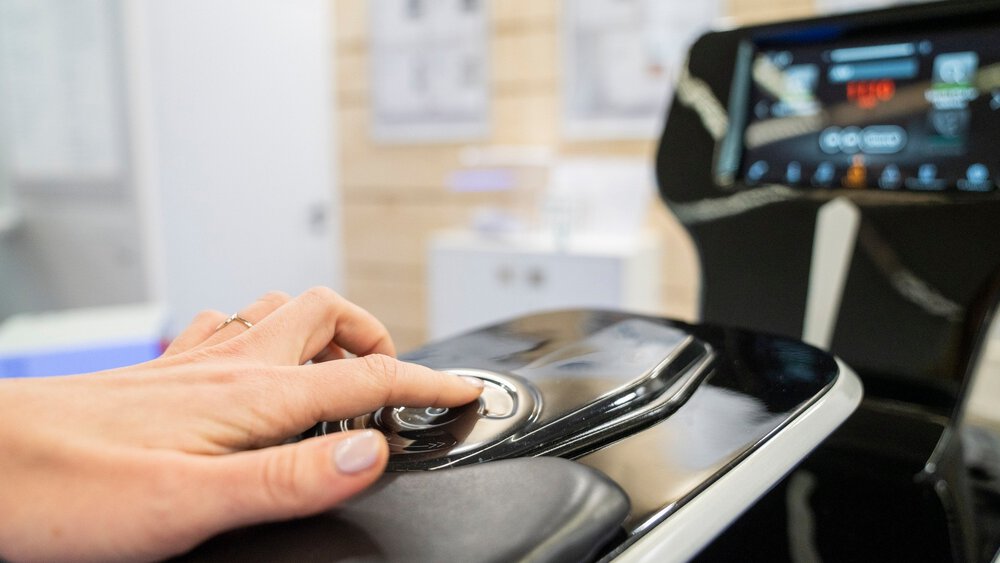
“New materials play a key role in printed electronics, which is why we are delighted that material manufacturers from all over the world are presenting their innovations at LOPEC,” says Wittmann. Industry giants such as Celanese, Covestro, Elantas, Henkel, Heraeus, and Sun Chemical as well as smaller specialized companies will be in Munich. The Finnish company Canatu, for example, will present electronics made from carbon nanotubes (CNT) at the LOPEC Conference. Printed CNT touch sensors replace buttons and switches in the car cockpit, for example, and offer more design freedom.
Printed electronics for individual designs
And speaking of the vehicle interior: It can be designed to be even more individual and, in the future, will even adapt to the mood or wishes of the passengers. In the LOPEC Innovation Showcase and at the LOPEC Conference, the US company E Ink will be teaming up with the German automotive supplier Marquardt to present switchable door panels. Thanks to E Ink’s electronic ink, they can change their color and pattern on demand.
Vehicle lighting is also increasingly becoming a design element. TactoTek will be discussing the production of dynamic displays, and animated and individualized light modules at the LOPEC Conference. The Finnish company combines printed electronics and LEDs with decorative and structural elements in a lightweight, injection-molded plastic part. This production method conserves resources as it requires fewer components and less plastic than conventional methods.
Strong interest from Asia
“LOPEC 2026 reflects the interest of the global automotive industry in printed electronics,” says Wittmann. For example, Changan, one of the largest Chinese vehicle manufacturers, will discuss the benefits of printed electronics at the LOPEC Conference.
Naxnova from India will give a presentation. The Naxnova Group includes the companies Quad from Belgium and ATT from Austria, both of which manufacture printed electronics, as well as the German automotive supplier HS Products Engineering. Naxnova’s product range also comprises printed lighting elements for vehicle interiors and exteriors, as well as sensors for driver assistance systems and climate control.
“Thanks to its sustainable characteristics and easy scalability, flexible and printed electronics promises strong growth,” says Wittmann: “That’s why we invite people to Munich every year to exchange ideas. With its combination of exhibition and conference, LOPEC has established itself as the leading marketplace for players from all over the world. Whether it’s insiders or newcomers, scientists or industry representatives, with LOPEC we provide targeted support for your business, and grant you easy access to latest technologies with huge potential.”
Downloads
Belonging images


Sabine Wagner
- PR Manager
Write an e-mail
Write an e-mail